-
Table of Contents
“9th Circuit Flags Hyundai Case as Breaking New Legal Ground in NY Claims”
Introduction
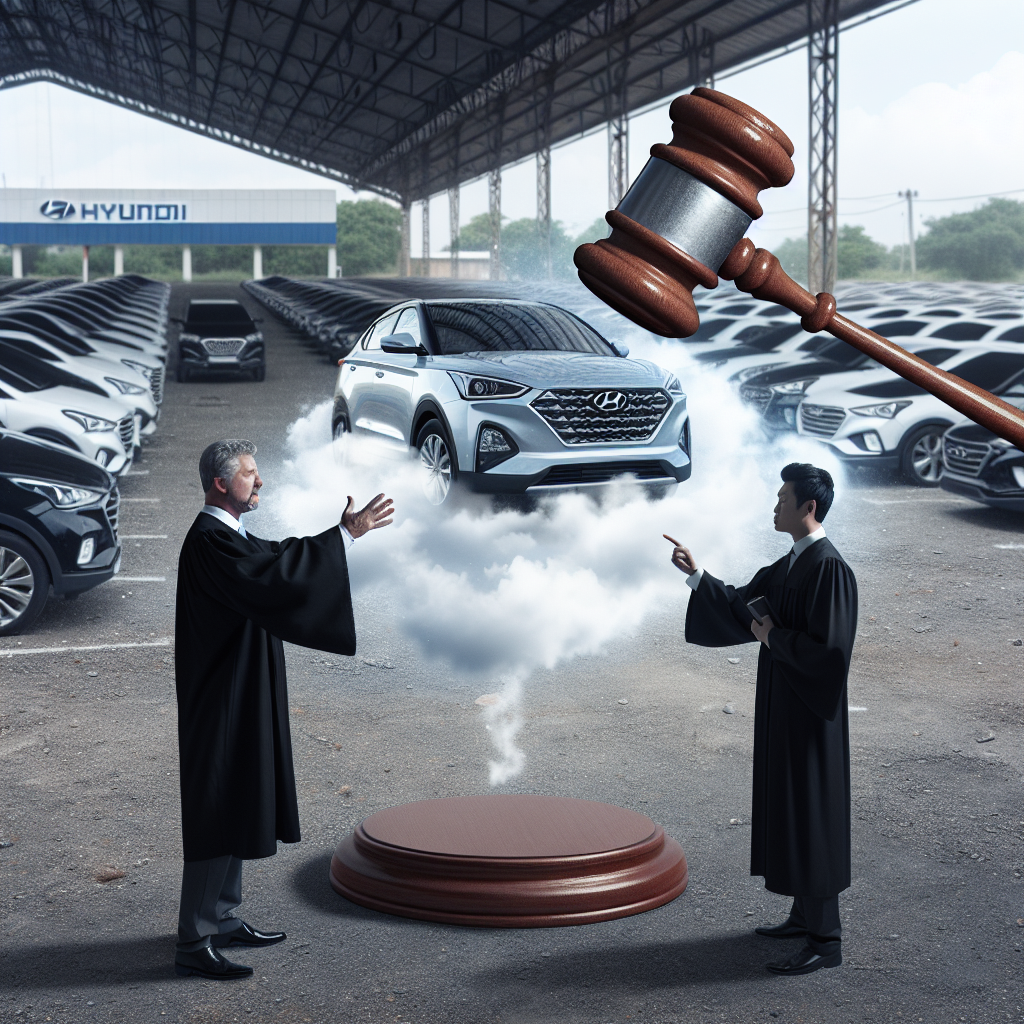
The Ninth Circuit Court of Appeals has ruled that legal claims brought under New York law against Hyundai raise a “novel” legal issue, warranting further examination. The case centers on whether Hyundai can be held liable under New York consumer protection statutes for alleged deceptive practices related to vehicle performance and advertising. The court’s decision to certify the question to the New York Court of Appeals underscores the complexity and potential significance of the legal issue, which could have broader implications for consumer protection litigation and corporate accountability.
Novel Legal Challenges In NY Claims Against Hyundai: 9th Circuit Weighs In
In a recent development that underscores the evolving landscape of consumer protection and product liability law, the Ninth Circuit Court of Appeals has weighed in on a case involving claims brought against Hyundai by New York plaintiffs, identifying the matter as raising a “novel” legal issue. The case centers on allegations that Hyundai misrepresented the fuel efficiency of certain vehicle models, prompting consumers to argue that they were misled into purchasing cars under false pretenses. While such claims are not uncommon in the realm of automotive litigation, the court’s characterization of the legal questions as novel signals a potentially significant shift in how similar cases may be evaluated in the future.
At the heart of the dispute is the application of New York consumer protection statutes to conduct that may have occurred, at least in part, outside the state. Plaintiffs allege that Hyundai engaged in deceptive marketing practices that violated New York’s General Business Law, particularly sections 349 and 350, which prohibit deceptive acts and false advertising. However, Hyundai has challenged the applicability of these statutes, arguing that the claims are extraterritorial and therefore fall outside the scope of New York law. This contention has led the Ninth Circuit to consider whether and to what extent New York’s consumer protection laws can be applied to conduct that has multi-jurisdictional elements.
In addressing this issue, the Ninth Circuit acknowledged that the legal questions presented are not only complex but also relatively untested in prior case law. The court noted that while New York courts have addressed the extraterritorial reach of their consumer protection statutes in various contexts, there remains ambiguity when it comes to cases involving nationwide marketing campaigns and the sale of products across state lines. This ambiguity has created a legal gray area, prompting the Ninth Circuit to seek guidance from the New York Court of Appeals on how to interpret and apply the relevant statutes under these circumstances.
The decision to certify questions to the New York Court of Appeals reflects the Ninth Circuit’s recognition of the importance of state-level interpretation in resolving issues that hinge on state law. By doing so, the court aims to ensure that its ruling aligns with the intent and precedent of New York’s highest court, thereby promoting consistency and legal clarity. Moreover, this move underscores the broader implications of the case, as a ruling on the extraterritorial application of New York’s consumer protection laws could influence how similar claims are litigated in other jurisdictions.
As the legal proceedings continue, stakeholders across the automotive industry and consumer advocacy groups are closely monitoring the case. The outcome could have far-reaching consequences for how companies market their products and how consumers seek redress for alleged misrepresentations. In the meantime, the Ninth Circuit’s recognition of the novel legal challenges presented by the case serves as a reminder of the dynamic nature of consumer protection law and the ongoing need for judicial interpretation in adapting legal frameworks to contemporary commercial practices.
How The 9th Circuit’s Ruling Could Reshape Product Liability Law

In a recent decision that could have far-reaching implications for product liability law, the Ninth Circuit Court of Appeals ruled that claims brought under New York law against Hyundai raise a “novel” legal issue. This ruling not only underscores the evolving nature of liability standards in the automotive industry but also signals a potential shift in how courts may interpret state law claims in the context of federal jurisdiction. The case centers on allegations that Hyundai failed to adequately warn consumers about a defect in one of its vehicle models, which allegedly led to a serious accident. Plaintiffs brought the case under New York law, asserting that the automaker had a duty to disclose the defect and that its failure to do so constituted a breach of that duty.
What makes the Ninth Circuit’s ruling particularly significant is its recognition that the legal questions at hand have not been definitively addressed by New York courts. By labeling the issue as “novel,” the appellate court acknowledged that it was treading into uncharted legal territory. This designation opens the door for further judicial interpretation and potentially invites certification of the question to New York’s highest court. In doing so, the Ninth Circuit has highlighted the complexities that arise when federal courts are tasked with applying state law, especially in cases involving emerging technologies and evolving consumer expectations.
Moreover, the court’s decision could influence how manufacturers approach risk disclosure and product warnings. If courts begin to interpret state laws more expansively in favor of consumer protection, companies may be compelled to adopt more rigorous standards for identifying and communicating potential product risks. This could lead to a broader application of the duty to warn, extending beyond traditional safety concerns to include issues such as software vulnerabilities or long-term performance degradation. In this way, the Ninth Circuit’s ruling may serve as a catalyst for more proactive corporate behavior in the realm of product safety.
Additionally, the ruling may affect the strategic considerations of plaintiffs and defendants alike. Plaintiffs may be encouraged to bring claims under state laws that have not yet been fully interpreted, hoping to benefit from favorable judicial innovation. Conversely, defendants may seek to limit exposure by advocating for more conservative readings of state statutes or by pushing for federal preemption in cases involving complex regulatory frameworks. The interplay between state and federal law thus becomes a critical factor in litigation strategy, particularly in jurisdictions like the Ninth Circuit, which often handles cases with national implications.
Furthermore, the decision underscores the importance of judicial interpretation in shaping the contours of product liability law. As courts confront new fact patterns and legal theories, their rulings can either reinforce existing doctrines or pave the way for doctrinal evolution. The Ninth Circuit’s willingness to engage with a novel issue suggests a judicial openness to reexamining traditional legal boundaries in light of contemporary challenges. This approach not only reflects the dynamic nature of the law but also emphasizes the judiciary’s role in balancing consumer protection with fair treatment of manufacturers.
In sum, the Ninth Circuit’s recognition of a novel issue in the Hyundai case could mark a turning point in product liability jurisprudence. By inviting further legal scrutiny and potentially influencing both corporate practices and litigation strategies, the ruling may contribute to a broader redefinition of the responsibilities that manufacturers owe to consumers under state law.
Implications Of The 9th Circuit’s ‘Novel’ Issue Finding For Future Auto Lawsuits
The recent decision by the Ninth Circuit Court of Appeals, which characterized certain New York state law claims against Hyundai as raising a “novel” legal issue, carries significant implications for future auto industry litigation. This designation not only underscores the evolving nature of consumer protection and product liability law but also signals a potential shift in how courts may approach similar claims moving forward. As automakers continue to integrate increasingly complex technologies into their vehicles, the legal landscape surrounding their responsibilities and liabilities is becoming more intricate.
At the heart of the Ninth Circuit’s finding is the recognition that the claims brought under New York law present questions that have not yet been definitively addressed by state courts. Specifically, the plaintiffs allege that Hyundai failed to equip certain vehicles with adequate anti-theft technology, despite being aware of a widespread vulnerability. The court noted that while the claims are grounded in traditional legal theories such as negligence and breach of implied warranty, the context in which they arise—namely, the failure to implement software-based security features—introduces a new dimension to the analysis. This intersection of emerging technology and established legal doctrines is what the court deemed “novel.”
The implications of this finding are twofold. First, it may encourage plaintiffs in other jurisdictions to pursue similar claims, particularly in cases where automakers are perceived to have lagged in adopting available safety or security technologies. The Ninth Circuit’s acknowledgment of the novelty of the issue could be interpreted as an invitation for state courts to weigh in and develop new legal standards tailored to the realities of modern vehicle design. This could lead to a patchwork of state-level decisions that either expand or limit manufacturer liability, depending on how each jurisdiction interprets the underlying legal principles.
Second, the decision may prompt automakers to reassess their risk exposure in light of potential litigation stemming from technological omissions. While traditional product liability claims have typically focused on physical defects or mechanical failures, the growing reliance on software and digital systems introduces new avenues for legal scrutiny. Manufacturers may now face increased pressure to not only meet existing safety standards but also to anticipate and address foreseeable risks associated with technological vulnerabilities. Failure to do so could expose them to claims that, while unprecedented, may gain traction in courts willing to explore uncharted legal territory.
Moreover, the Ninth Circuit’s ruling could influence how federal courts handle similar cases in the future. By identifying the issue as novel and remanding it for further proceedings, the court effectively deferred to state courts to provide clarity. This deference underscores the importance of state law in shaping the contours of liability in the automotive sector, particularly when federal courts are confronted with questions that lack clear precedent. As a result, legal practitioners and industry stakeholders alike will be closely monitoring how New York and other states address these emerging issues.
In conclusion, the Ninth Circuit’s recognition of a novel legal issue in the Hyundai case marks a pivotal moment in automotive litigation. It highlights the growing complexity of legal claims involving modern vehicle technologies and sets the stage for further judicial exploration. As courts grapple with these challenges, the outcome will likely have a lasting impact on how automakers design, market, and secure their products in an increasingly digital age.
Q&A
1. **Question:** What did the 9th Circuit say about the New York claims against Hyundai?
**Answer:** The 9th Circuit stated that the New York claims against Hyundai raise a “novel” legal issue.
2. **Question:** What is the nature of the legal issue in the Hyundai case according to the 9th Circuit?
**Answer:** The legal issue involves whether Hyundai can be held liable under New York law for alleged vehicle defects despite not being headquartered or primarily operating in New York.
3. **Question:** What action did the 9th Circuit take regarding the New York claims?
**Answer:** The 9th Circuit certified the question to the New York Court of Appeals to determine how New York law applies in this context.
Conclusion
The Ninth Circuit concluded that the claims brought under New York law against Hyundai present a “novel” legal issue, warranting certification to the New York Court of Appeals for authoritative guidance.