-
Table of Contents
- The United States Enters Israel-Iran Conflict: Strategic Bombing of Iranian Nuclear Sites Raises Global Alarm
- Introduction: A New Phase in Middle Eastern Tensions
- Background: The Fragile Balance of Power
- Iran’s Nuclear Program: A Longstanding Global Concern
- Israel’s Preemptive Doctrine
- The U.S. Airstrike: Details and Implications
- Operation Overview
- Iran’s Response
- Historical Context: U.S. Involvement in Middle Eastern Conflicts
- Past Interventions
- Strategic and Political Ramifications
- Impact on Iran’s Nuclear Program
- Regional Reactions
- Global Diplomatic Fallout
- Case Study: The 1981 Israeli Strike on Iraq’s Osirak Reactor
The United States Enters Israel-Iran Conflict: Strategic Bombing of Iranian Nuclear Sites Raises Global Alarm

Introduction: A New Phase in Middle Eastern Tensions
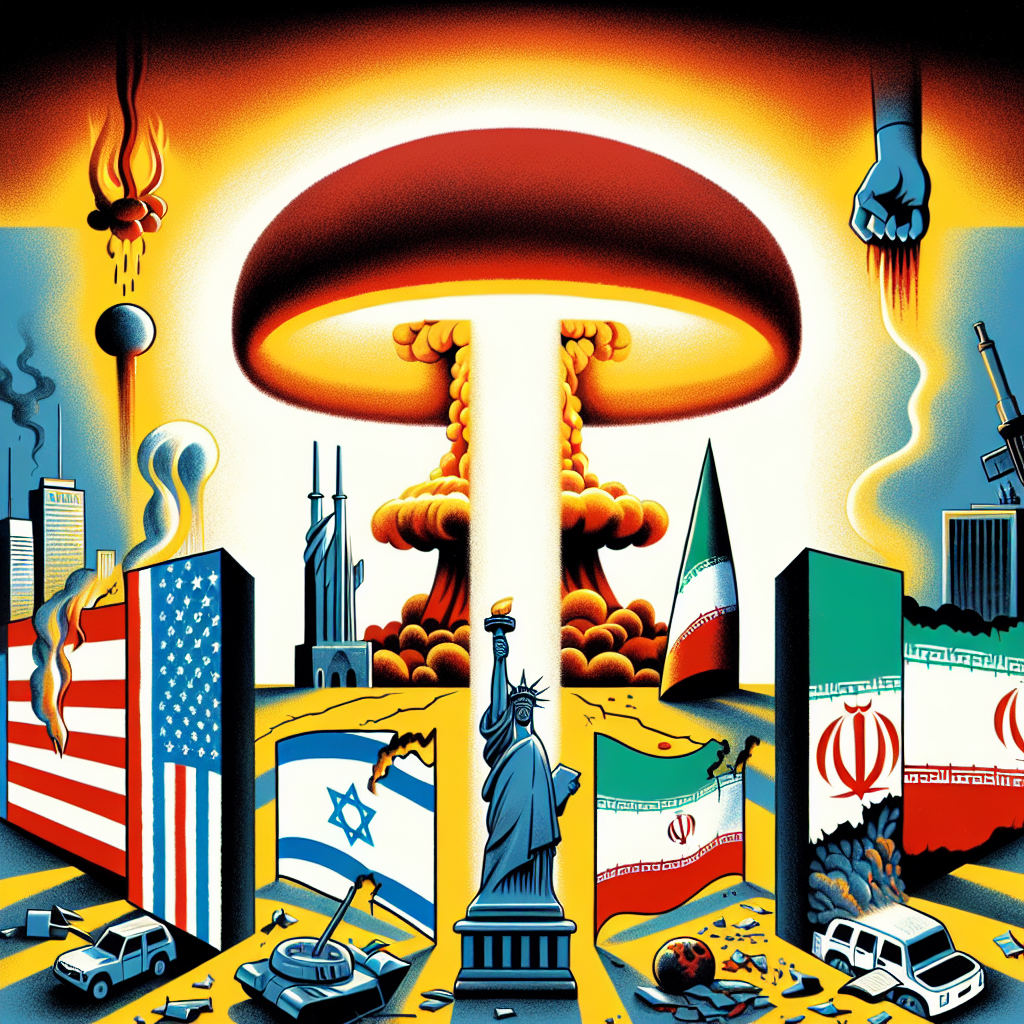
In a dramatic escalation of Middle Eastern hostilities, the United States has directly intervened in Israel’s ongoing conflict with Iran by launching a targeted airstrike on a key Iranian nuclear facility. According to reports from the Associated Press and other international media outlets, the U.S. deployed 30,000-pound bunker-buster bombs early Sunday morning, striking a uranium enrichment site deep within Iranian territory. The attack, which caused what U.S. officials described as “severe damage,” marks a significant turning point in the geopolitical landscape of the region and raises critical questions about the future of Iran’s nuclear ambitions, the stability of the Middle East, and the role of global powers in regional conflicts.
Background: The Fragile Balance of Power
Iran’s Nuclear Program: A Longstanding Global Concern
Iran’s nuclear program has been a focal point of international diplomacy and tension for over two decades. The Islamic Republic insists that its nuclear activities are for peaceful purposes, such as energy production and medical research. However, Western powers, particularly the United States and Israel, have long suspected Iran of harboring ambitions to develop nuclear weapons.
The 2015 Joint Comprehensive Plan of Action (JCPOA), commonly known as the Iran nuclear deal, was a landmark agreement aimed at curbing Iran’s nuclear capabilities in exchange for sanctions relief. However, the U.S. withdrawal from the deal in 2018 under the Trump administration reignited tensions and led Iran to resume uranium enrichment at levels far exceeding the JCPOA’s limits.
Israel’s Preemptive Doctrine
Israel has consistently maintained a policy of preemptive action against perceived existential threats. The country has previously conducted covert operations and airstrikes against nuclear facilities in Iraq (1981) and Syria (2007). Iran, with its advanced nuclear infrastructure and hostile rhetoric toward Israel, has long been viewed as the most significant threat to Israeli national security.
The U.S. Airstrike: Details and Implications
Operation Overview
According to military sources, the U.S. used Massive Ordnance Penetrators (MOPs), each weighing approximately 30,000 pounds, to target a fortified uranium enrichment facility located near Natanz, a city long associated with Iran’s nuclear program. The bombs are designed to penetrate deep underground bunkers, making them ideal for striking heavily fortified nuclear sites.
- Time of Strike: Early Sunday morning, under the cover of darkness.
- Target: A uranium enrichment facility believed to be central to Iran’s nuclear weapons development.
- Casualties: Unconfirmed, but Iranian state media reported multiple injuries and significant structural damage.
- Damage Assessment: U.S. officials claim “severe damage” to the facility, potentially setting back Iran’s nuclear program by years.
Iran’s Response
Iranian officials condemned the strike as an act of war and accused the United States of crossing “a very big red line.” The Iranian Revolutionary Guard Corps (IRGC) has vowed retaliation, and Supreme Leader Ayatollah Ali Khamenei declared that the Islamic Republic would “respond decisively to this aggression.”
In a televised address, Iranian President Ebrahim Raisi stated, “This blatant violation of our sovereignty will not go unanswered. The United States has now made itself a direct party to this conflict.”
Historical Context: U.S. Involvement in Middle Eastern Conflicts
Past Interventions
The United States has a long history of military involvement in the Middle East, often justified by the need to protect national interests, ensure regional stability, or combat terrorism. Key interventions include:
- 1991 Gulf War: A U.S.-led coalition expelled Iraqi forces from Kuwait.
- 2001 Invasion of Afghanistan: In response to the 9/11 attacks, the U.S. targeted al-Qaeda and the Taliban.
- 2003 Iraq War: A controversial invasion based on claims of weapons of mass destruction.
- 2014–2019 ISIS Campaign: U.S. airstrikes and special forces supported local militias in defeating ISIS.
This latest strike marks a departure from previous U.S. policy, which had largely avoided direct military engagement with Iran despite years of proxy conflicts and cyber warfare.
Strategic and Political Ramifications
Impact on Iran’s Nuclear Program
While the full extent of the damage is still being assessed, military analysts suggest that the strike could significantly delay Iran’s ability to produce weapons-grade uranium. Satellite imagery shows extensive structural collapse at the targeted site, and initial reports indicate that key centrifuge arrays were destroyed.
However, experts caution that Iran’s nuclear program is decentralized, with multiple facilities spread across the country. “This is a major blow, but not a knockout punch,” said Dr. Ali Vaez, Director of the Iran Project at the International Crisis Group. “Iran has the technical know-how and resources to rebuild, albeit over time.”
Regional Reactions
The strike has elicited mixed reactions across the Middle East:
- Israel: Praised the U.S. for its decisive action, with Prime Minister Benjamin Netanyahu calling it “a historic moment in the fight against nuclear terrorism.”
- Saudi Arabia and Gulf States: Expressed concern over escalating tensions but stopped short of condemning the U.S. action.
- Iraq and Syria: Warned that further escalation could destabilize the entire region.
- Turkey and Qatar: Called for immediate de-escalation and a return to diplomatic negotiations.
Global Diplomatic Fallout
International reactions have been swift and polarized. Russia and China condemned the U.S. strike as a violation of international law, while European Union leaders expressed alarm over the potential collapse of diplomatic efforts to revive the JCPOA.
United Nations Secretary-General António Guterres urged all parties to exercise restraint, warning that “the world cannot afford another full-scale war in the Middle East.”
Case Study: The 1981 Israeli Strike on Iraq’s Osirak Reactor
The current situation bears striking similarities to Israel’s 1981 airstrike on Iraq’s Osirak nuclear reactor. At the time, Israel