-
Table of Contents
- Bringing the Courtroom to Campus: Federal Circuit Judges Hold Oral Arguments at North Carolina Law Schools
- Introduction: A Unique Educational Opportunity
- The Federal Circuit and Its Role
- Historical Context
- Law Schools as Courtrooms: The North Carolina Tour
- Participating Institutions
- Educational Impact
- Case Studies: Justice in Action
- Case Study 1: Patent Infringement Dispute
- Case Study 2: Veterans’ Benefits Appeal
- Case Study 3: Employment Discrimination Claim
- Bridging Theory and Practice
- Faculty Perspectives
- Judicial Outreach and Public Engagement
- Quotes from the Bench
- Student Reactions
- Statistical Insights: The Value of Experiential Learning
Bringing the Courtroom to Campus: Federal Circuit Judges Hold Oral Arguments at North Carolina Law Schools
Introduction: A Unique Educational Opportunity
In a rare and impactful initiative, Federal Circuit judges recently brought live oral arguments to three North Carolina law schools, offering students a front-row seat to the judicial process. This outreach effort, part of a broader mission to demystify the appellate court system and inspire the next generation of legal professionals, allowed law students to witness “justice in action” without leaving their campuses. The event not only provided a practical supplement to traditional legal education but also underscored the importance of transparency and accessibility in the American judicial system.
The Federal Circuit and Its Role
The United States Court of Appeals for the Federal Circuit, established in 1982, holds a unique position in the federal judiciary. Unlike other appellate courts, which are geographically based, the Federal Circuit has nationwide jurisdiction over specific subject matters, including patent law, international trade, government contracts, and veterans’ benefits. Its decisions often have far-reaching implications for innovation, commerce, and public policy.
Historical Context
The Federal Circuit was created through the merger of the United States Court of Customs and Patent Appeals and the appellate division of the United States Court of Claims. This consolidation aimed to bring consistency to patent law and other specialized areas. Over the decades, the court has played a pivotal role in shaping intellectual property jurisprudence and has become a critical venue for high-stakes litigation involving some of the world’s largest corporations and most complex legal issues.
Law Schools as Courtrooms: The North Carolina Tour
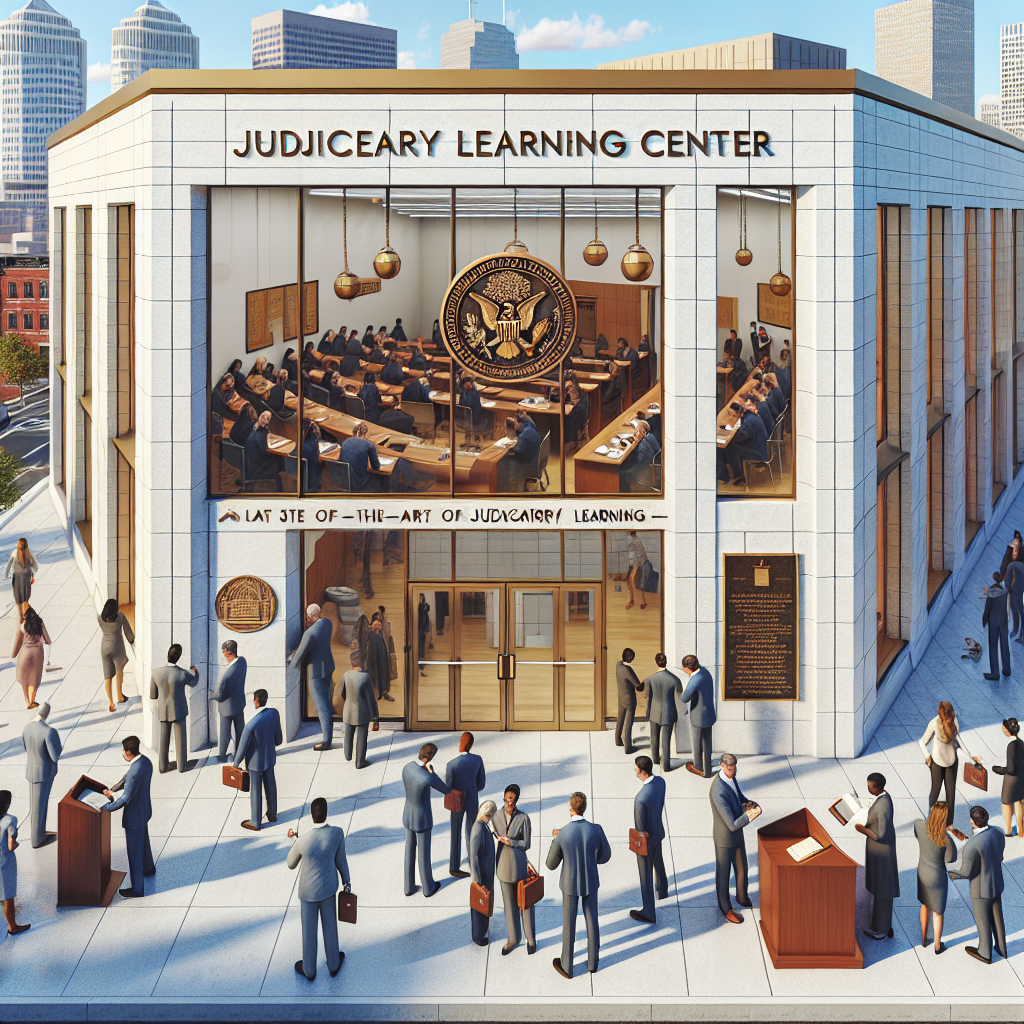
In a concerted effort to engage with the academic community, Federal Circuit judges held oral arguments at three prominent North Carolina law schools: Duke University School of Law, the University of North Carolina School of Law, and North Carolina Central University School of Law. These sessions were open to students, faculty, and the public, offering a rare glimpse into the appellate process outside the traditional courtroom setting.
Participating Institutions
- Duke University School of Law: Known for its strong emphasis on legal scholarship and public service, Duke Law hosted a panel of judges who heard cases involving patent disputes and veterans’ claims.
- University of North Carolina School of Law: As one of the oldest public law schools in the country, UNC Law provided a historic backdrop for arguments that touched on administrative law and government contracts.
- North Carolina Central University School of Law: A historically Black law school with a mission to diversify the legal profession, NCCU Law welcomed the court for cases that included issues of federal employment law and civil rights.
Educational Impact
For students, the experience was transformative. Instead of reading appellate decisions in casebooks, they observed the dynamic interplay between judges and attorneys, gaining insights into legal strategy, judicial reasoning, and courtroom decorum. Professors integrated the arguments into their curricula, encouraging students to analyze the cases beforehand and discuss the outcomes afterward.
Case Studies: Justice in Action
Several notable cases were argued during the court’s visit, each offering a window into the complexities of federal appellate litigation.
Case Study 1: Patent Infringement Dispute
At Duke Law, one of the cases involved a dispute between two technology companies over a software patent. The appellant argued that the lower court had misinterpreted the scope of the patent claims, while the appellee contended that the patent was invalid due to prior art. The judges engaged in rigorous questioning, probing the technical details and legal standards for patent validity. Students observed how expert testimony and claim construction played pivotal roles in appellate review.
Case Study 2: Veterans’ Benefits Appeal
Another case, heard at UNC Law, involved a veteran appealing a denial of disability benefits. The appellant’s counsel argued that the Department of Veterans Affairs had failed to consider key medical evidence. The judges examined the administrative record and discussed the standard of review for agency decisions. This case highlighted the court’s role in ensuring that federal agencies adhere to due process and statutory mandates.
Case Study 3: Employment Discrimination Claim
At NCCU Law, the court heard a case involving a federal employee who alleged racial discrimination in promotion decisions. The legal arguments centered on evidentiary standards and the burden-shifting framework established in McDonnell Douglas Corp. v. Green. The judges’ questions illuminated the challenges of proving discriminatory intent and the importance of procedural fairness in employment law.
Bridging Theory and Practice
The presence of the Federal Circuit on campus served as a powerful bridge between academic study and real-world application. Students were able to:
- Observe oral advocacy techniques and judicial questioning in real time.
- Understand how appellate courts interpret statutes, regulations, and precedent.
- Engage with judges and attorneys during post-argument Q&A sessions.
- Gain exposure to specialized areas of law not typically covered in depth in the standard curriculum.
Faculty Perspectives
Law professors praised the initiative as a valuable pedagogical tool. “This is experiential learning at its finest,” said one UNC Law professor. “It brings the appellate process to life and shows students what it means to be an effective advocate.” Faculty members also noted that the event sparked increased interest in judicial clerkships and public service careers.
Judicial Outreach and Public Engagement
The Federal Circuit’s visit to North Carolina is part of a broader trend toward judicial outreach. In recent years, several federal appellate courts have held arguments at law schools and public venues to promote civic education and transparency. These efforts align with the judiciary’s commitment to fostering public trust and understanding of the legal system.
Quotes from the Bench
Judge Kimberly A. Moore, Chief Judge of the Federal Circuit, emphasized the importance of such initiatives: “By bringing the court to law schools, we hope to inspire students and provide them with a deeper appreciation for the rule of law. It’s also an opportunity for us to hear fresh perspectives and engage with the next generation of legal thinkers.”
Student Reactions
Students expressed enthusiasm and gratitude for the opportunity. “It was incredible to see how the judges dissected each argument,” said a Duke Law 2L. “It made me realize how much preparation and precision goes into appellate advocacy.” Another student from NCCU Law noted, “As a future lawyer of color, it was empowering to see judges who look like me and to know that I can aspire to those heights.”
Statistical Insights: The Value of Experiential Learning
According to the American Bar Association (ABA), experiential