-
Table of Contents
- Federal Judge Blocks Trump Administration’s Election Overhaul: A Move to Prevent Chaos and Confusion
- Introduction
- Background: The Trump Administration’s Proposed Election Changes
- Overview of the Executive Order
- Legal Challenges and Opposition
- The Court’s Ruling
- Judge Denise J. Casper’s Decision
- Legal Basis for the Injunction
- Historical Context: Federal vs. State Control of Elections
- The Constitutional Framework
- Past Precedents
- Case Studies: Impact of Election Overhauls
- Case Study 1: Georgia’s Election Law (2021)
- Case Study 2: Texas Senate Bill 1 (2021)
- Statistical Insights: Voter Fraud vs. Voter Access
- Incidence of Voter Fraud
- Impact on Voter Turnout
- Reactions to the Ruling
- Political Leaders
- Civil Rights Organizations
Federal Judge Blocks Trump Administration’s Election Overhaul: A Move to Prevent Chaos and Confusion

Introduction
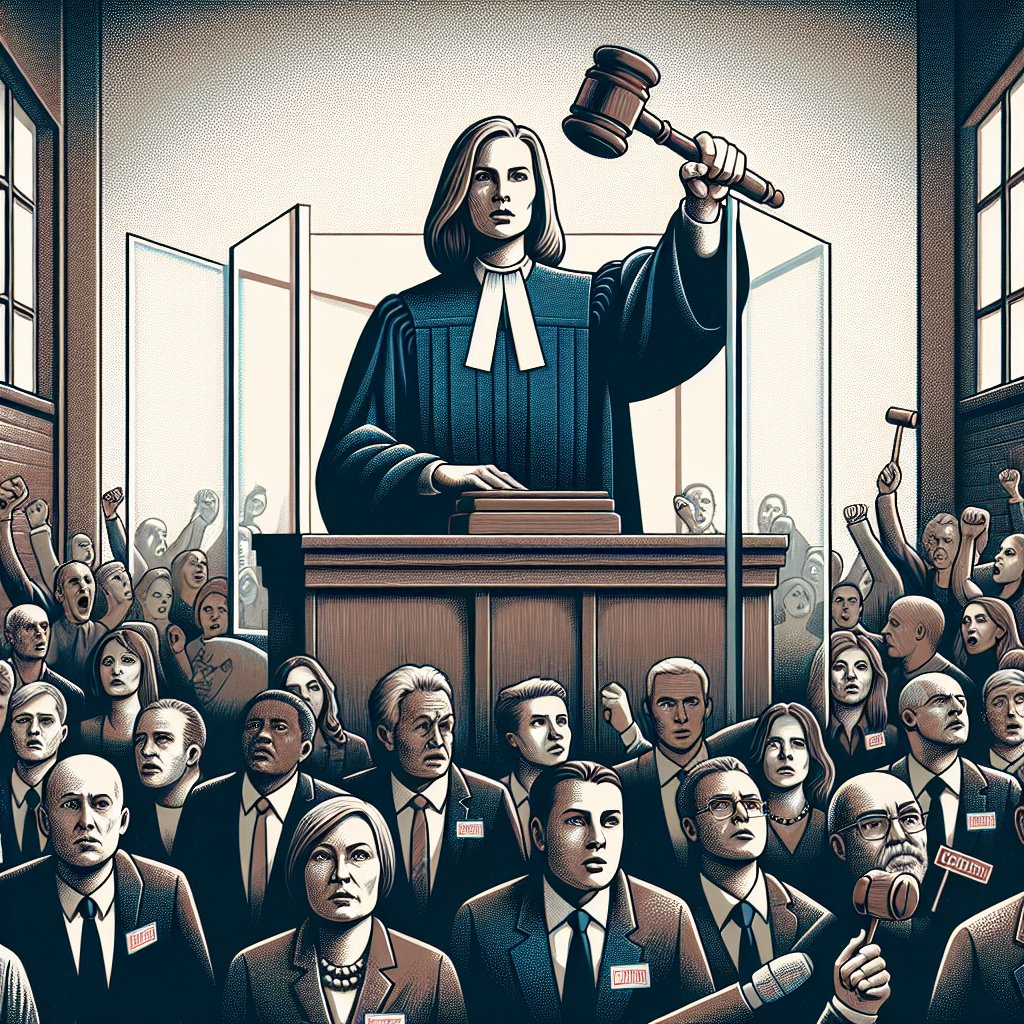
In a significant legal development, a federal judge in Boston has blocked a sweeping order from the Trump administration aimed at overhauling federal election procedures. U.S. District Judge Denise J. Casper issued the ruling on Friday, stating that the proposed changes “could create chaos and confusion” in the electoral process. This decision marks a pivotal moment in the ongoing debate over election integrity, federal oversight, and the balance of power between state and federal governments in managing elections.
Background: The Trump Administration’s Proposed Election Changes
Overview of the Executive Order
The Trump administration had introduced an executive order that sought to implement significant changes to how federal elections are conducted. The order included provisions that would:
- Centralize certain aspects of election oversight under federal control
- Mandate new voter identification requirements
- Restrict the use of mail-in ballots
- Impose new deadlines for voter registration and ballot submission
Supporters of the order argued that these measures were necessary to prevent voter fraud and ensure the integrity of federal elections. However, critics contended that the changes would disproportionately affect minority voters, create administrative burdens for state election officials, and potentially disenfranchise millions of voters.
Legal Challenges and Opposition
Almost immediately after the order was announced, a coalition of civil rights groups, state governments, and election watchdog organizations filed lawsuits challenging its legality. The primary argument was that the executive order overstepped federal authority and infringed upon states’ constitutional rights to manage their own elections.
The Court’s Ruling
Judge Denise J. Casper’s Decision
In her ruling, Judge Denise J. Casper emphasized the potential for widespread disruption if the Trump administration’s order were allowed to take effect. She wrote, “The proposed changes could create chaos and confusion, particularly so close to an election cycle.” The judge also noted that the federal government had not provided sufficient evidence to justify the sweeping nature of the reforms or demonstrated that existing election systems were inadequate.
Legal Basis for the Injunction
Judge Casper granted a preliminary injunction, effectively halting the implementation of the executive order. Her decision was grounded in several key legal principles:
- Federalism: The U.S. Constitution grants states the primary authority to regulate elections. The judge found that the executive order encroached upon this authority without clear congressional authorization.
- Administrative Procedure Act (APA): The court determined that the administration failed to follow proper rulemaking procedures under the APA, including public notice and comment periods.
- Equal Protection Clause: The judge expressed concern that the changes could disproportionately impact marginalized communities, potentially violating the Equal Protection Clause of the Fourteenth Amendment.
Historical Context: Federal vs. State Control of Elections
The Constitutional Framework
The U.S. Constitution provides a complex framework for election governance. Article I, Section 4, known as the Elections Clause, gives states the authority to determine the “Times, Places and Manner” of holding elections for Senators and Representatives, but also allows Congress to “make or alter such Regulations.” This dual authority has led to ongoing tensions between state and federal powers.
Past Precedents
Historically, federal intervention in elections has occurred during times of crisis or when states have failed to protect voting rights. Notable examples include:
- The Voting Rights Act of 1965: Enacted to combat racial discrimination in voting, this law gave the federal government oversight over certain state election practices.
- Help America Vote Act (HAVA) of 2002: Passed in response to the 2000 presidential election debacle, HAVA established minimum standards for states in areas such as voting systems and voter registration databases.
However, these interventions were legislated by Congress, not imposed unilaterally by the executive branch, which is a key distinction in the current case.
Case Studies: Impact of Election Overhauls
Case Study 1: Georgia’s Election Law (2021)
In 2021, Georgia passed a controversial election law that included new ID requirements for absentee ballots, limited ballot drop boxes, and restricted third-party distribution of food and water to voters in line. The law sparked national debate and multiple lawsuits. While supporters claimed it enhanced election security, critics argued it suppressed voter turnout, particularly among Black and low-income communities.
Case Study 2: Texas Senate Bill 1 (2021)
Texas also enacted a sweeping election law in 2021 that banned drive-thru voting, imposed new ID requirements, and increased penalties for election officials who made errors. The law led to confusion during the 2022 primaries, with thousands of mail-in ballots rejected due to new ID rules. This case illustrates how rapid changes to election laws can lead to administrative challenges and voter disenfranchisement.
Statistical Insights: Voter Fraud vs. Voter Access
Incidence of Voter Fraud
Numerous studies have shown that voter fraud in the United States is exceedingly rare. According to a comprehensive study by the Brennan Center for Justice, the rate of voter fraud in U.S. elections ranges from 0.0003% to 0.0025%. Despite widespread claims, there is no evidence of systemic fraud that would justify sweeping federal reforms.
Impact on Voter Turnout
Conversely, restrictive voting laws have been shown to reduce voter turnout, particularly among minority, elderly, and low-income populations. A 2019 study published in the American Journal of Political Science found that strict voter ID laws can reduce turnout by as much as 3%, with disproportionate effects on African American and Latino voters.
Reactions to the Ruling
Political Leaders
Democratic leaders praised the ruling as a victory for democracy and state sovereignty. Massachusetts Attorney General Andrea Campbell stated, “This decision reaffirms that our elections should be free from federal overreach and political manipulation.”
Republican leaders, however, criticized the decision, arguing that it undermines efforts to secure elections. Former President Donald Trump issued a statement calling the ruling “a politically motivated attack on election integrity.”
Civil Rights Organizations
Groups such as the ACLU and the NAACP Legal Defense Fund welcomed the injunction. In a joint statement, they said, “